No. 006
September 1, 2026
AI is everywhere in practice and accountable for nothing
Adoption is now ordinary. Liability has not moved an inch. The replacement question is settled by the second fact, not the first.
Fig. 01 — Title block · signature cell unassigned · fig. 00 · Editorial
If a builder builds a house and the house collapses and kills the owner, that builder shall be put to death.
— Code of Hammurabi, §229, c. 1750 BCE
Three-quarters of UK practices now use AI on at least some of their projects. Not one of those projects was signed by it.
That gap is the honest answer to where AI in architecture stands, and it is more useful than either headline on offer. The tools have stopped being novel. They are also still nowhere near the part of the job the profession is paid for. Both things have been true long enough that we should stop treating the second as a temporary reprieve and start treating it as the structure of the thing.
So, plainly: AI will not replace architects. Not this year, and not by the mechanism most people are worried about. But something is being replaced, and it is getting far less attention than it deserves.
What the survey actually shows
RIBA's 2026 report, its largest survey of members on the subject, puts adoption at 74 per cent of practices using AI on at least some projects. Almost three-quarters of those users report productivity improvements, and a majority say their organisation has seen a return on the investment. By any ordinary reading, the technology has arrived and it is working.
The same report contains the sentence that matters more. Governance has not kept pace with adoption, and few practices have a formal AI policy at all. A profession has absorbed a new instrument into three-quarters of its work without deciding, in writing, who is answerable for what the instrument produces.
That is the actual state of play. Not a capability frontier. An accountability vacuum, sitting inside a workflow that already depends on the tools.
The strongest version of the other side
The case against my position is not stupid, and pretending otherwise would waste your time.
It runs like this. Every year the list of things AI cannot do in this profession gets shorter, and it gets shorter faster than the sceptics predicted. Image generation went from unusable to a standard concept-stage habit in about thirty months. Code-checking tools now read drawings against published standards and return results with citations attached. Much of what a practice actually bills for is not visionary: it is production, coordination, checking, and the patient assembly of information. If that tier can be automated to an acceptable standard, and if an insurer will one day write a policy over it, the economics change quickly and the profession's protections start to look less like a moat and more like a delay.
Anyone who has watched the last three years and still finds that argument silly is not paying attention. I think it is wrong about one specific thing.
What the signature is for
An architect's core product is not a drawing. It is a drawing that someone is accountable for.
That accountability is not a formality attached to the end of the work. It is the thing the client, the authority and the insurer are buying, and it does not transfer. Run a set through an automated code checker and you remain responsible for compliance, at the same standard of care, with the same consequences if something is missed. The tools help. They also miss real violations and raise false ones, which means every output needs a competent human to sort the two, and that human has to be someone who could have done the check unaided.
This is why the replacement question keeps getting answered incorrectly. It is framed as a capability question: can the machine produce the drawing? The market question is different. Can the machine be held responsible for the drawing? Something that cannot be sued, disciplined, struck off, or called to a site meeting to explain itself cannot occupy the position architects occupy, however good the output gets. Capability is necessary. It is not what is being sold.
It is strongest where commitment is cheapest
Look at where AI has actually landed in the working week and the pattern is consistent. Concept design, option testing, visualisation, and the early conversation with a client about what a building might be.
All of it sits at the front of the process. That is the stage where being wrong is cheap, where nothing is dimensioned, where an option you discard costs an afternoon rather than a change order. The technology is genuinely good there. It has made almost no comparable inroad into the stages where being wrong is expensive, because those stages are governed less by how fast you can produce something than by who carries it.
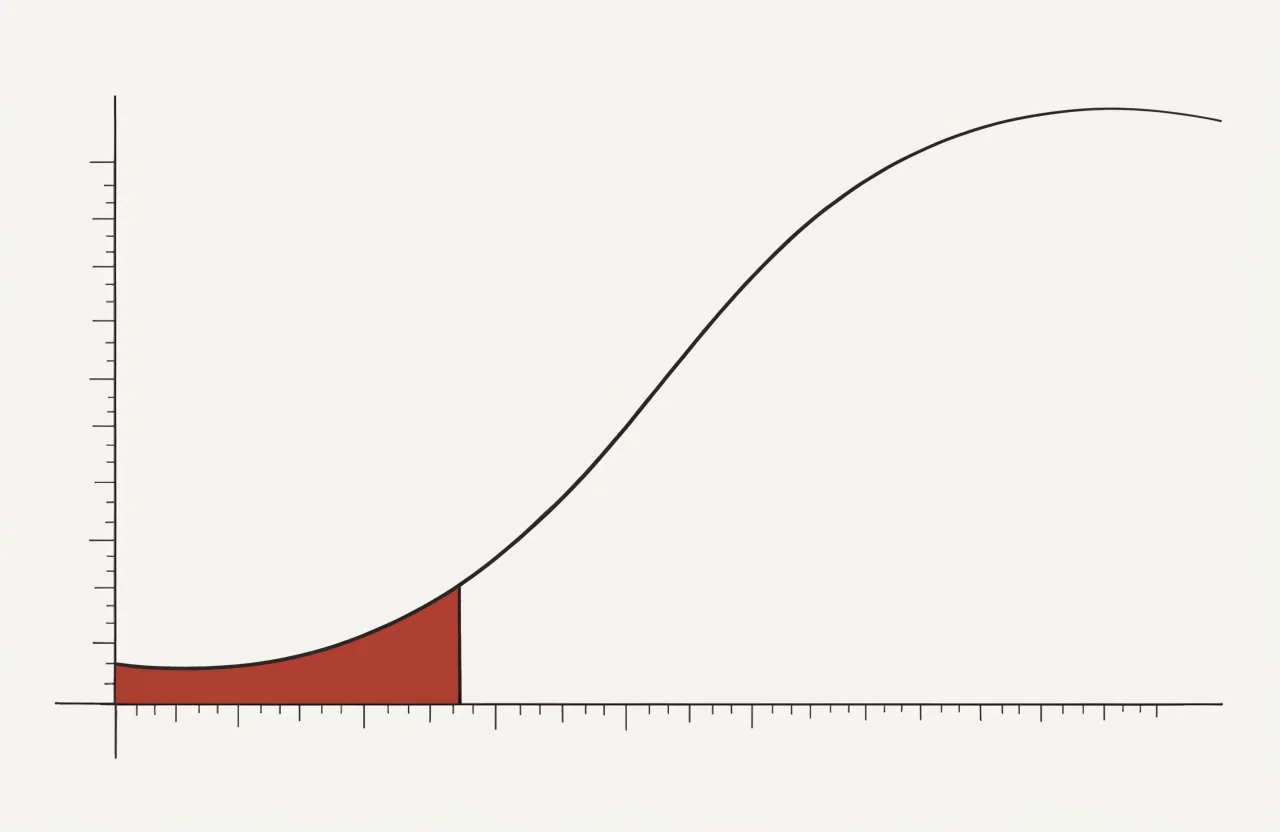
FIG. 01 - The cost of being wrong. Everything AI does well sits under the flat part of the curve.
The replacement that is actually happening
Here is my concession, and it is not small.
"Architects will not be replaced" is a statement about the profession. It is not a promise to every person in it. The work most exposed is production work carried out by people who are not yet the ones signing: the drafting, the sheet setup, the visualisation, the first pass at a schedule. That work has always been how the profession trained its next generation of judgment. You learn what a detail is for by drawing four hundred of them badly.
If firms buy the productivity and quietly stop hiring the tier that used to supply it, the ladder loses its lower rungs, and the shortage arrives fifteen years later as a shortage of people qualified to sign. RIBA's respondents flagged their own version of this: most believe AI raises the risk of imitation and homogenisation in design, and a related concern runs through the report about people without professional competence producing work that looks professional.
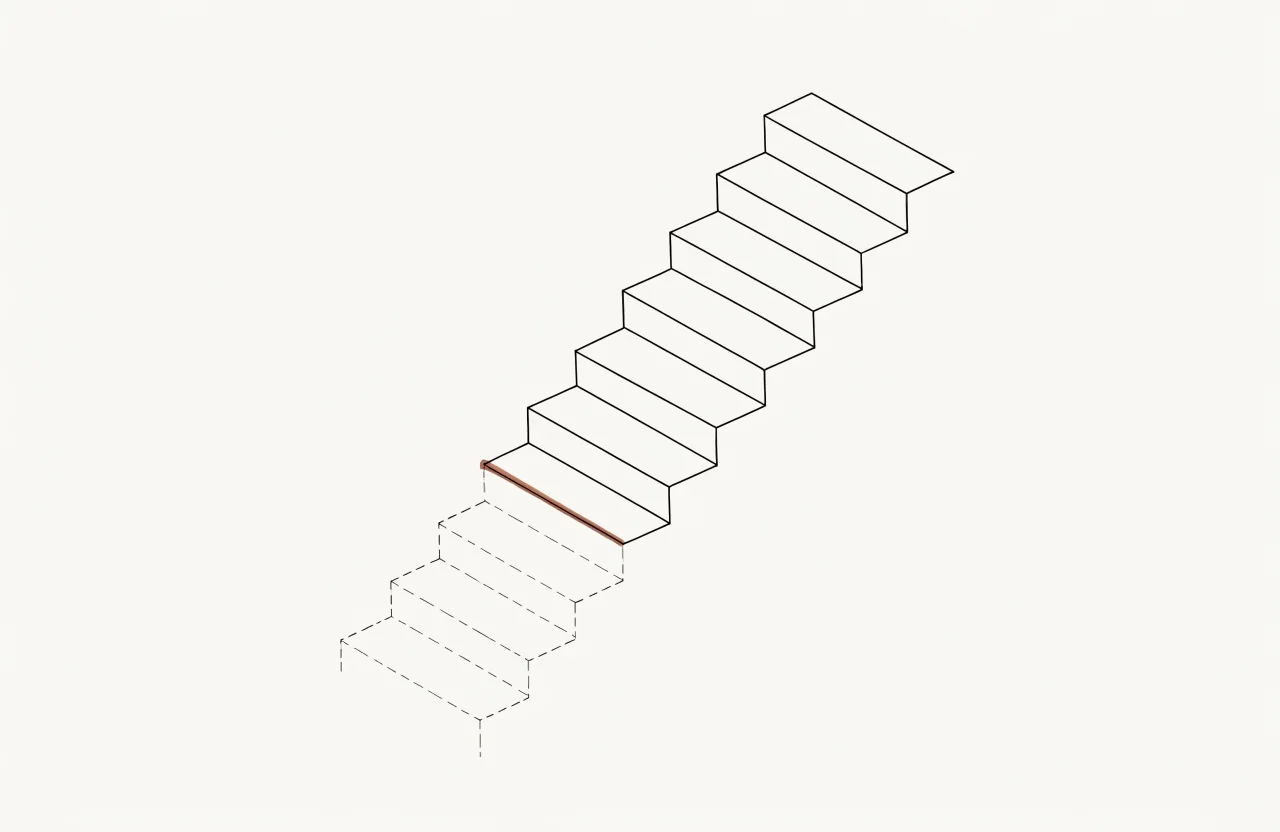
FIG. 02 - The ladder without its lower rungs. Remove the treads that trained judgment and the flight still reaches the same landing, for a while.
That is the actual risk, and it is a management decision rather than a technological inevitability.
The line to hold
The useful question is not whether AI will replace architects. It is narrower and more uncomfortable. On your current project, what are you being paid for?
If the honest answer is production, drawings assembled competently and handed over, that position is exposed, and it was exposed before any of this arrived. If the answer includes judgment under contested conditions and a name on the sheet, the technology is not coming for it, because it structurally cannot hold it.
The profession's protection was never that the work is too hard to automate. It is that someone has to answer for it. That has not changed. What has changed is that the answering is now the job, and the three-quarters of practices already using these tools without a written policy have some deciding to do before the question is decided for them.
Discussion
PUBLICATION
ArchitectureLM
SUBJECT
AI in architecture
NEWSLETTER
Weekly, free
CONTACT
hello@architecturelm.com
© 2026 ArchitectureLM. All rights reserved.